

Lazy eye

Lazy eye, also known as amblyopia, is a condition in which the vision in one eye is weaker

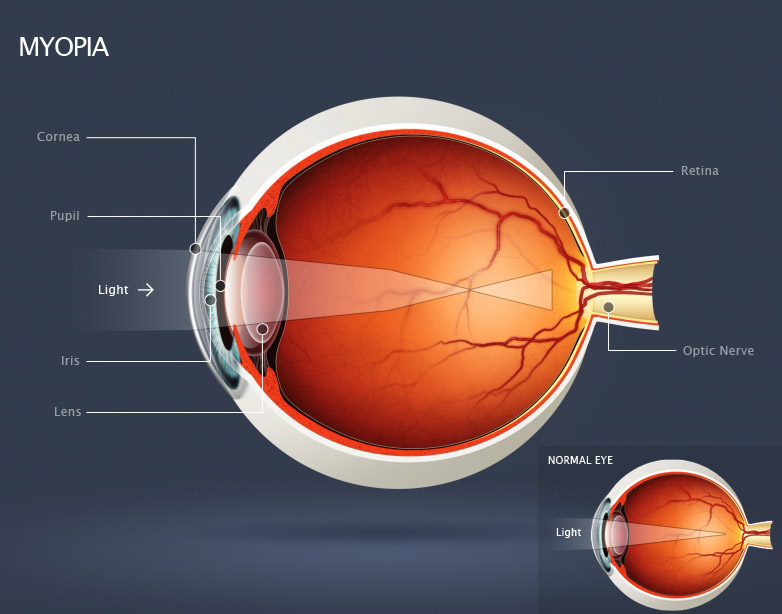
than the other. This can occur for a variety of reasons, such as a misaligned or crossed eye, or a difference in the refractive power of the two eyes. One of the most common causes of lazy eye is a condition called strabismus, in which the eyes are not properly aligned with each other. This can cause the brain to "turn off" the input from the misaligned eye in order to avoid double vision. Another cause of lazy eye can be a difference in the refractive power of the two eyes, also known as anisometropia. This can occur when one eye is more nearsighted or farsighted than the other. The brain will then favor the eye with better vision and suppress the weaker eye.
Lazy eye can also occur as a result of a cataract or other eye disease, or even a traumatic injury to the eye.
Symptoms of lazy eye include poor depth perception, double vision, and difficulty judging distances. The condition is typically diagnosed during a comprehensive eye exam.
Treatment for lazy eye typically involves patching the stronger eye to force the weaker eye to work harder, or using special glasses with a blurring lens to achieve the same effect. In some cases, surgery may be necessary to correct the underlying problem causing the lazy eye. Early detection and treatment are crucial for preventing long-term vision problems associated with lazy eye. Regular eye exams can help catch the condition early and prevent it from progressing.
We at Lalit Eye Centre, Gurugram expertise in diagnosis, management and follow up of children with Lazy eye.


Comments